How to Safely Mix Linux Distribution Packages with Distrobox
Have you ever found the perfect application only to discover it's not available for your Linux distribution? This frustrating scenario is common due to the diversity of Linux package formats. Fortunately, tools like Distrobox allow you to mix packages from different distributions safely using containers. In this Q&A, we'll explore how Distrobox works, its benefits, and how to use it.
What is Distrobox and how does it work?
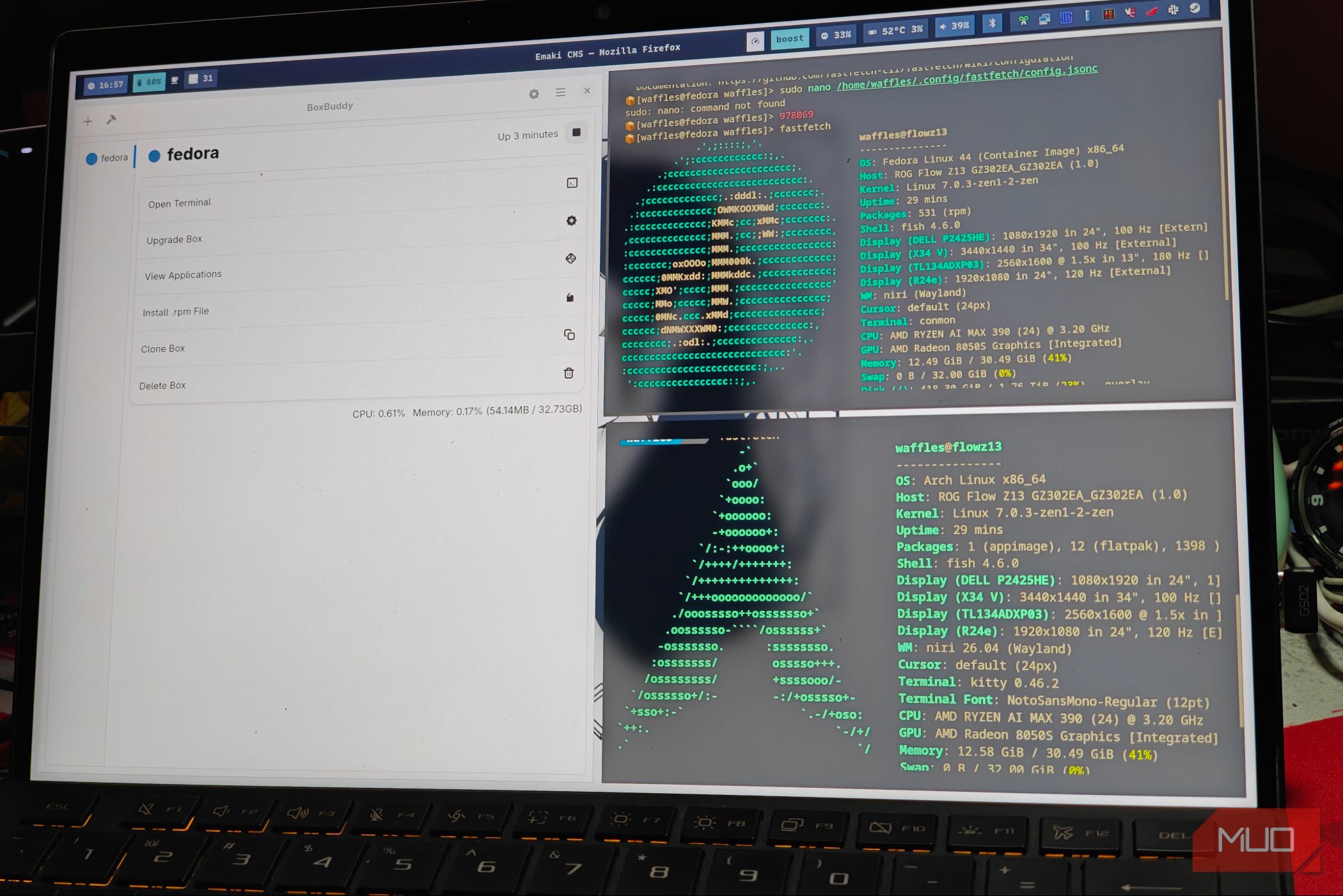
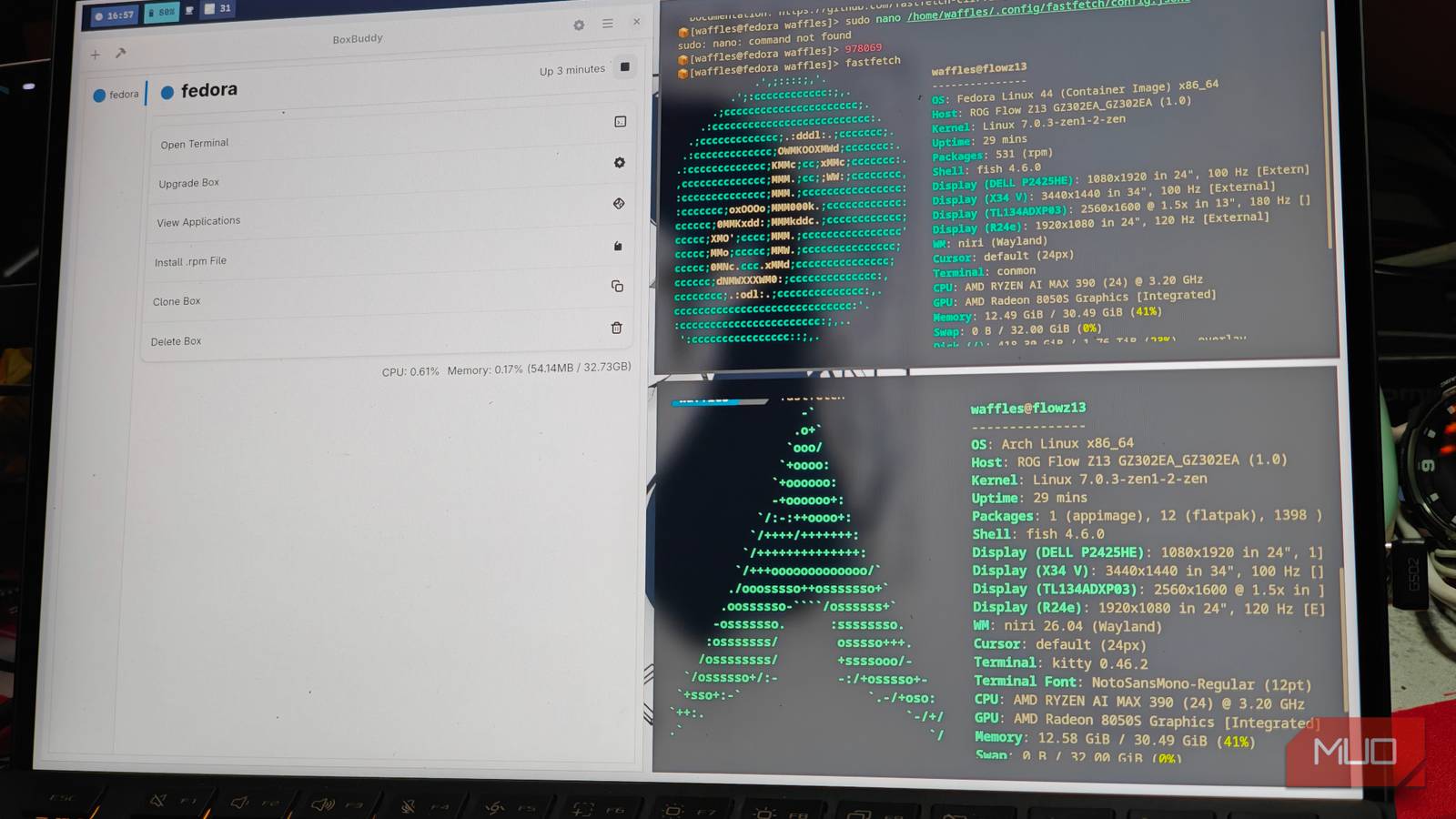
Distrobox is a command-line tool that leverages container technology (like Podman or Docker) to create a Linux distribution environment within your host system. It works by spinning up a lightweight container running a different distro—say, Fedora inside an Ubuntu host—and tightly integrating it with your desktop. This integration includes seamless file access, hardware device sharing (e.g., USB, GPU), and even clipboard sharing. Essentially, you get a fully functional environment of another distro without dual-booting or virtualizing a complete operating system. Distrobox handles user permissions and network settings automatically, making it feel like native package management. The result: you can install software from any supported distribution as if it were part of your own, all while keeping your host system clean and stable.
Why would you need to mix packages from different Linux distributions?
Linux distributions each have their own package repositories, often with unique software choices or versions. Mixing packages becomes necessary when the app you need isn't available for your current distro, or when a newer version exists only on another distro's repo. For instance, a developer might need specific libraries from Arch Linux while running Ubuntu, or a gaming enthusiast might want the latest graphics drivers from Fedora's RPM Fusion. Distrobox lets you cherry-pick these packages without cluttering your main system with incompatible dependencies. It also helps test software across multiple distros on one machine, which is invaluable for QA teams or open-source contributors. By keeping each distro environment contained, you prevent dependency conflicts and ensure your host OS remains untouched.
What are the risks of mixing packages without a tool like Distrobox?
Attempting to install packages from different distributions directly on your host system—often called “cross-distro package mixing”—can lead to severe instability. Each distro configures its package manager with specific library versions, file paths, and dependency trees. Force-installing a .deb on an Arch system or an .rpm on Debian may overwrite critical system files, break shared libraries, or create conflicts that are extremely hard to resolve. The result can be system freezes, broken desktop environments, or even boot failures. Users frequently encounter “dependency hell,” where resolving one package’s requirements breaks another. Distrobox avoids all this by isolating the foreign package inside a container. The container shares only what you allow (like your home directory), so even if you accidentally break the container, your host OS remains perfectly stable. This isolation is the key advantage of container-based package mixing over manual tinkering.
How does Distrobox prevent system breakage?
Distrobox prevents breakage by wrapping every non-native distro environment in an isolated container. When you create a container for, say, Fedora on an Ubuntu host, Distrobox launches a minimal Fedora image with its own package manager (dnf) and libraries. All software you install inside that container stays confined to its filesystem. The container does not have root access to host system directories unless you explicitly bind mount them. This means no conflicting files, no overwritten system tools, and no shared dependencies that could cause version mismatches. Furthermore, Distrobox integrates with your user namespace—your UID inside the container matches your host UID—so file permissions work correctly. If something goes wrong (e.g., a broken package), you simply delete or recreate the container, leaving your host unscathed. Distrobox also updates containers independently, so you can run bleeding-edge distro experiments without fear. This containment is the cornerstone of safe multi-distro package management.
Step-by-step: How to install and use Distrobox?
- Install container runtime: Distrobox requires Podman or Docker. For most distros, run
sudo apt install podman(Debian/Ubuntu) orsudo dnf install podman(Fedora). - Install Distrobox: Download the script from the official GitHub release or use your package manager if available (e.g.,
sudo apt install distrobox). - Create a container: Run
distrobox create --name fedora-box --image fedora:latest. Replacefedorawith any supported distro. - Enter the container: Use
distrobox enter fedora-box. You'll land in a shell inside the Fedora environment. - Install packages: Now use Fedora’s package manager normally:
sudo dnf install vlc. The app integrates with your host desktop—launchers appear, and hardware access works. - Manage containers: List with
distrobox list, stop withdistrobox stop, delete withdistrobox rm.
That's it! You now have a safe, isolated environment to mix distro packages at will.
Are there alternatives to Distrobox for mixing distro packages?
Yes, several alternatives exist, though Distrobox has become the most user-friendly. Toolbox (developed by Red Hat) is similar and works well with Podman, but it’s more integrated with Fedora Silverblue and lacks Distrobox’s simpler command syntax. Podman or Docker directly can be used to run containers, but you’d need to manually configure volume mounts, user mapping, and desktop integration—Distrobox automates these steps. Flatpak provides isolated apps from different sources, but it doesn’t let you mix full distro package managers; it only installs Flatpak-flavored packages. Snap similarly offers cross-distro apps but with its own confinement model. For purely command-line tools, you could use chroot or Debootstrap to create a different distro’s filesystem, but these lack the seamless desktop integration and container security of Distrobox. Ultimately, Distrobox strikes a balance between simplicity, integration, and safety, making it the top choice for mixing distro packages without breaking anything.