10 Critical Things You Need to Know About SPIFFE for Agentic AI Security
As artificial intelligence systems become more autonomous and agentic, ensuring their identity and trustworthiness is a growing challenge. Traditional identity frameworks designed for human users and static credentials simply don't work for dynamic, ephemeral, and non-human entities. Enter SPIFFE—a battle-tested open standard that provides a secure identity framework for workloads, originally built for microservices but now essential for AI agents. This article covers the ten most important aspects of SPIFFE that you need to understand to secure your AI-driven systems.
1. What Is SPIFFE and Why Does It Exist?
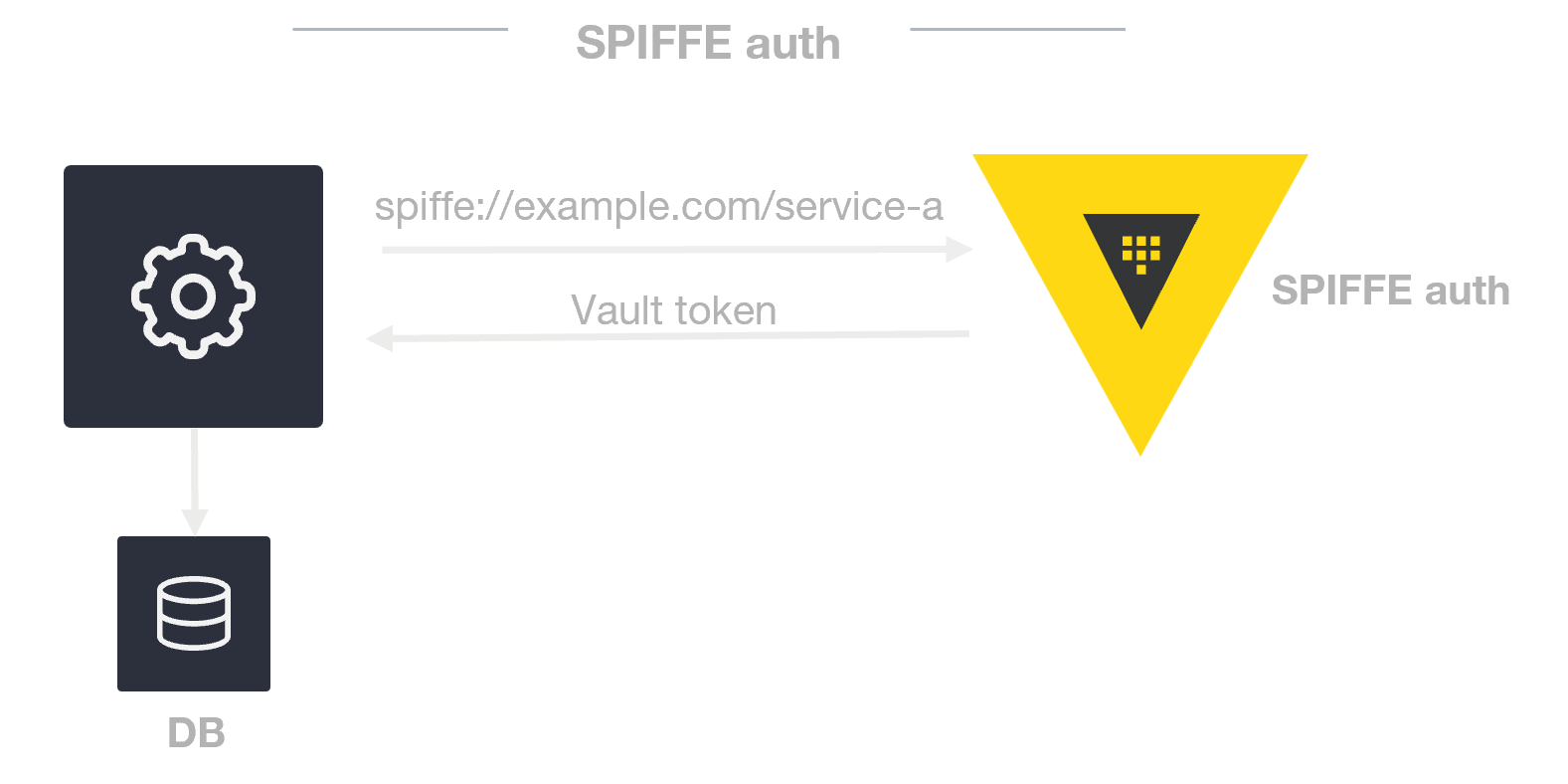
SPIFFE (Secure Production Identity Framework For Everyone) is an open standard that defines how to issue and validate cryptographically verifiable identities for workloads—whether that's an application, a microservice, or an AI agent. It was created to solve the problem of authenticating services in cloud-native environments without relying on permanent secrets like passwords or API keys. Instead, SPIFFE issues short-lived, automatically rotated identities called SPIFFE IDs. This eliminates many of the security risks associated with long-lived credentials, such as theft or leakage. For agentic AI, this means each autonomous agent can have a unique, verifiable identity that proves what it is and what it's allowed to do, even as it moves across different environments.
2. Why Traditional Identity Systems Fall Short for AI Agents
Traditional identity and access management (IAM) systems are built around human users—they use usernames, passwords, multi-factor authentication, and session tokens. But AI agents are not human; they don't have a physical presence, they can spin up and shut down in seconds, and they often operate without direct human oversight. Static credentials create a huge attack surface: if a password or API key is stolen, an attacker can impersonate the agent. Moreover, agents need to authenticate to other agents across different networks and organizations, something that legacy IAM systems were never designed to handle. SPIFFE addresses these gaps by focusing on workload identity rather than user identity, making it a natural fit for non-human actors.
3. SPIFFE IDs Give Each AI Agent a Unique, Verifiable Identity
At the core of SPIFFE is the SPIFFE ID—a URI-like identifier (e.g., spiffe://example.org/ai-agent/weather-bot) that is cryptographically bound to a specific workload. This ID is not tied to a person or a device; it's tied to the running instance of the agent. When combined with X.509 certificates issued by a SPIFFE-compatible authority, the ID becomes verifiable through mutual TLS (mTLS). This means that every time an AI agent communicates with another service or agent, it can prove its identity without exposing any long-term secret. For multi-agent systems, this eliminates the risk of one agent impersonating another, because each identity is unique and tied to the agent's cryptographic material.
4. SPIFFE Enables a Zero Trust Architecture for Agent Communications
Zero trust is the principle that no entity—inside or outside a network—should be automatically trusted. SPIFFE implements zero trust by mandating mutual authentication for every interaction between workloads. Using SPIFFE-issued certificates, two AI agents can establish mutual TLS (mTLS) connections. In this model, both sides must present valid SPIFFE IDs, and the connection is encrypted. This prevents man-in-the-middle attacks and ensures that only authorized agents can exchange data. In agentic AI systems where agents may collaborate on sensitive tasks (e.g., managing financial transactions or controlling industrial equipment), zero trust is not optional—it's a necessity for security.
5. Federation Across Domains Allows Interoperability Between Different Organizations
Agentic AI systems often span multiple clouds, organizations, or even countries. For example, an AI agent from a logistics company might need to interact with a shipping agent from a partner firm. SPIFFE's federation model solves this by allowing identities issued in one trust domain (e.g., spiffe://logistics.com) to be validated in another (e.g., spiffe://shipping.io). The federation works through a chain of trust: each domain's SPIFFE authority signs the identities, and the other domain can verify them using public keys. This makes secure cross-domain collaboration straightforward, without requiring shared secrets or manual configuration. For multi-agent ecosystems that must work across boundaries, federation is a game-changer.
6. Dynamic Credential Lifecycle Management Keeps Identity Fresh and Secure
AI agents are often ephemeral—they may be created for a single task and then destroyed. SPIFFE supports this dynamic nature by automatically issuing, rotating, and revoking credentials. Instead of long-lived certificates that could be compromised, SPIFFE certificates have short lifetimes (e.g., from minutes to hours). When an agent finishes its job or is decommissioned, its identity is automatically revoked. This reduces the window of opportunity for attackers: even if a credential is stolen, it will expire quickly and become useless. Additionally, automated rotation means no manual intervention is required, which is crucial when you have hundreds or thousands of agents operating at scale.
7. Ephemeral Identities Match the Transient Nature of AI Workloads
Many AI agents are designed to be stateless and short-lived—they spin up, perform a task, and vanish. Traditional identity methods would require provisioning a new secret for each instance, which is both slow and risky. SPIFFE's ephemeral identity model solves this by issuing identities on the fly using a secure sidecar or agent process. The workload receives a cryptographically verifiable identity without ever needing to store a long-term secret. For example, an AI agent running in a Kubernetes pod can get its SPIFFE ID automatically when the pod starts. This aligns perfectly with the serverless and containerized deployment patterns common in modern AI systems.
8. Use Case: Multi-Agent Smart City Coordination
Imagine a smart city where dozens of AI agents coordinate traffic lights, energy grids, emergency response, and public transportation. Each agent must authenticate to others before sharing control commands. Without a robust identity framework, a malicious agent could impersonate the traffic controller and cause chaos. With SPIFFE, each agent gets a unique ID (e.g., spiffe://city.gov/traffic-agent/east-sector). All communications use mTLS, so only authenticated agents can issue commands. If an agent is compromised, its certificate is revoked instantly, stopping further damage. The federation feature allows agents from different city departments (transport, energy, public safety) to trust each other securely. This example shows how SPIFFE brings safety and reliability to complex multi-agent systems.
9. How SPIFFE Prevents Impersonation and Unauthorized Access
Impersonation is one of the biggest risks in agentic AI—an attacker could create a fake agent that pretends to be a legitimate one to steal data or execute unauthorized actions. SPIFFE prevents this through cryptographic binding: each SPIFFE ID is linked to the agent's public key, and the private key is generated and held only by the agent. During mutual TLS, the agent must prove it holds the private key corresponding to its ID. Additionally, SPIFFE authorities enforce strict access controls on which workloads can receive which IDs. This means even if an attacker manages to copy a valid ID, they cannot use it without the corresponding private key. Combined with automatic revocation, the window for exploitation is minimized.
10. SPIFFE Is an Open Standard Backed by a Strong Community
One of the key advantages of SPIFFE is that it's an open standard under the Cloud Native Computing Foundation (CNCF). This means it has broad industry support, extensive documentation, and multiple implementations (like SPIRE). You are not locked into a single vendor. The community actively develops tooling, integrations, and best practices. For AI security teams, this means you can adopt SPIFFE with confidence, knowing it will continue to evolve alongside the ecosystem. Whether you're securing a handful of AI agents or millions, the open standard ensures interoperability and long-term viability.
Conclusion
As agentic AI becomes more prevalent, the need for a dedicated identity framework is clear. SPIFFE provides a proven, open, and flexible solution that addresses the unique challenges of non-human actors—from ephemeral workloads to cross-domain federation. By adopting SPIFFE, organizations can build a zero-trust environment where every AI agent has a verifiable identity and every interaction is authenticated and encrypted. Whether you're deploying a single autonomous bot or a swarm of coordinated agents, SPIFFE is the foundation you need to keep your AI systems secure and trustworthy.