How 100 Self-Driving Cars Tamed Traffic Jams Using Reinforcement Learning
Imagine rush-hour traffic that flows smoothly with fewer sudden stops, saving fuel for everyone—not just those driving the smartest cars. Recently, a team deployed 100 reinforcement learning (RL)-controlled vehicles onto a busy highway during peak congestion. These autonomous cars learned to smooth out stop-and-go waves, cutting fuel consumption for all drivers. The experiment marks a major step in using artificial intelligence to solve real-world traffic problems.
The Hidden Culprit: Stop-and-Go Waves
If you’ve ever been stuck in traffic that suddenly slows down with no visible cause, you’ve experienced a stop-and-go wave. These phantom jams form when small driving variations—like tapping the brake or speeding up—get amplified through the chain of cars behind. Human reaction times mean that each driver brakes slightly harder than the one ahead, turning a minor fluctuation into a full-blown wave of congestion that moves backward through traffic.
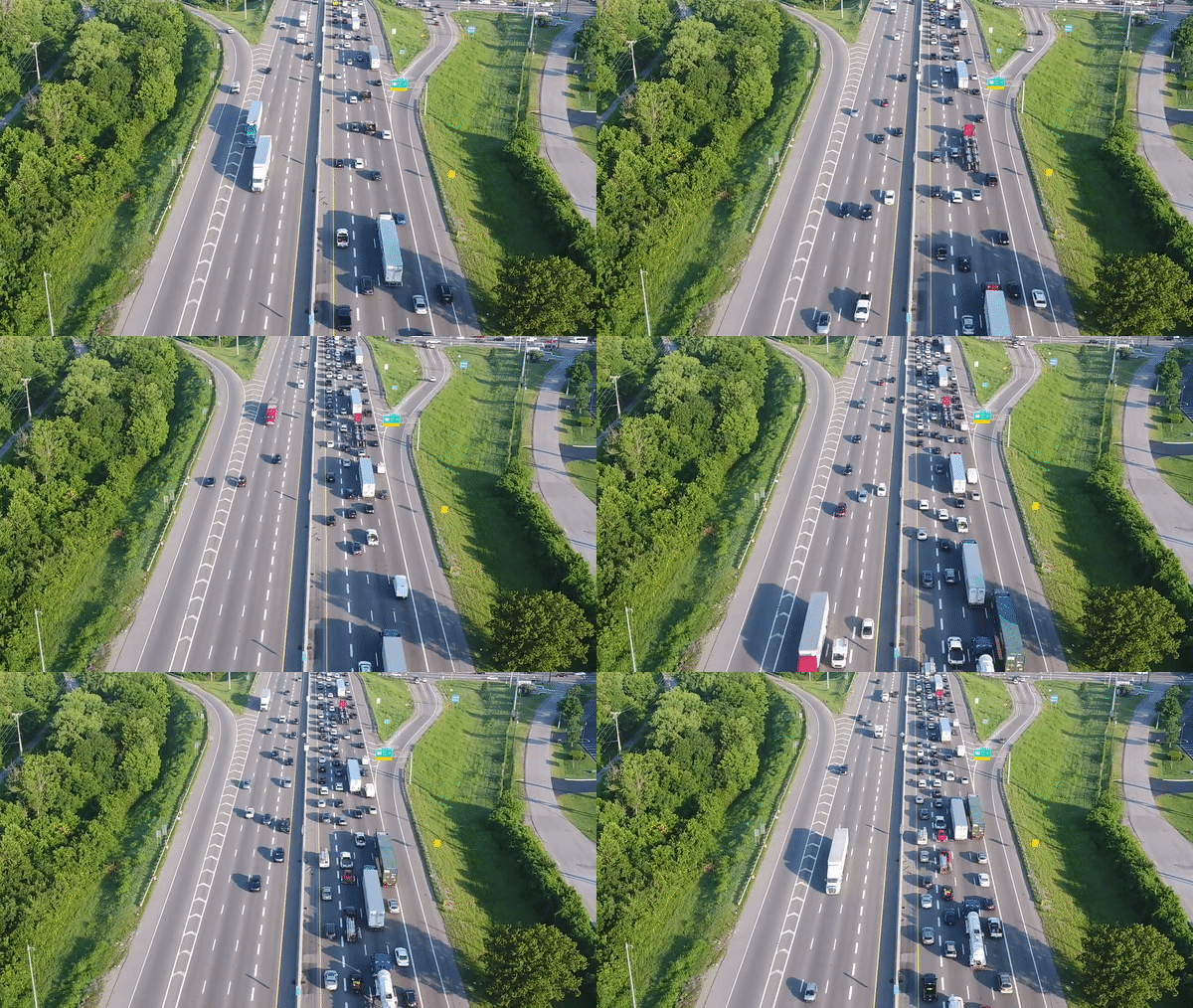
These waves are not rare; they appear whenever highway density surpasses a critical threshold. The constant acceleration and deceleration waste enormous amounts of fuel, increase CO₂ emissions, and raise the risk of rear-end collisions. Traditional fixes like ramp metering or variable speed limits require expensive infrastructure and centralized control. A more scalable solution lies in using autonomous vehicles (AVs) that can adjust their behavior in real time.
Reinforcement Learning: Teaching Cars to Be Smarter
Simply putting AVs on the road isn’t enough—they need to drive in ways that benefit everyone. Reinforcement learning offers a powerful way to train such cooperative behaviors. In this study, the researchers built fast, data-driven simulations where RL agents could practice controlling a vehicle. The agents learned to maximize energy efficiency while maintaining smooth traffic flow and operating safely alongside human drivers.
One key advantage of the trained controllers: they are decentralized and rely only on standard radar sensors, meaning they could be installed on most modern vehicles. The RL algorithm optimized for overall fuel efficiency, not just for the AV itself, leading to system-wide benefits.
The 100-AV Highway Deployment: From Simulation to Reality
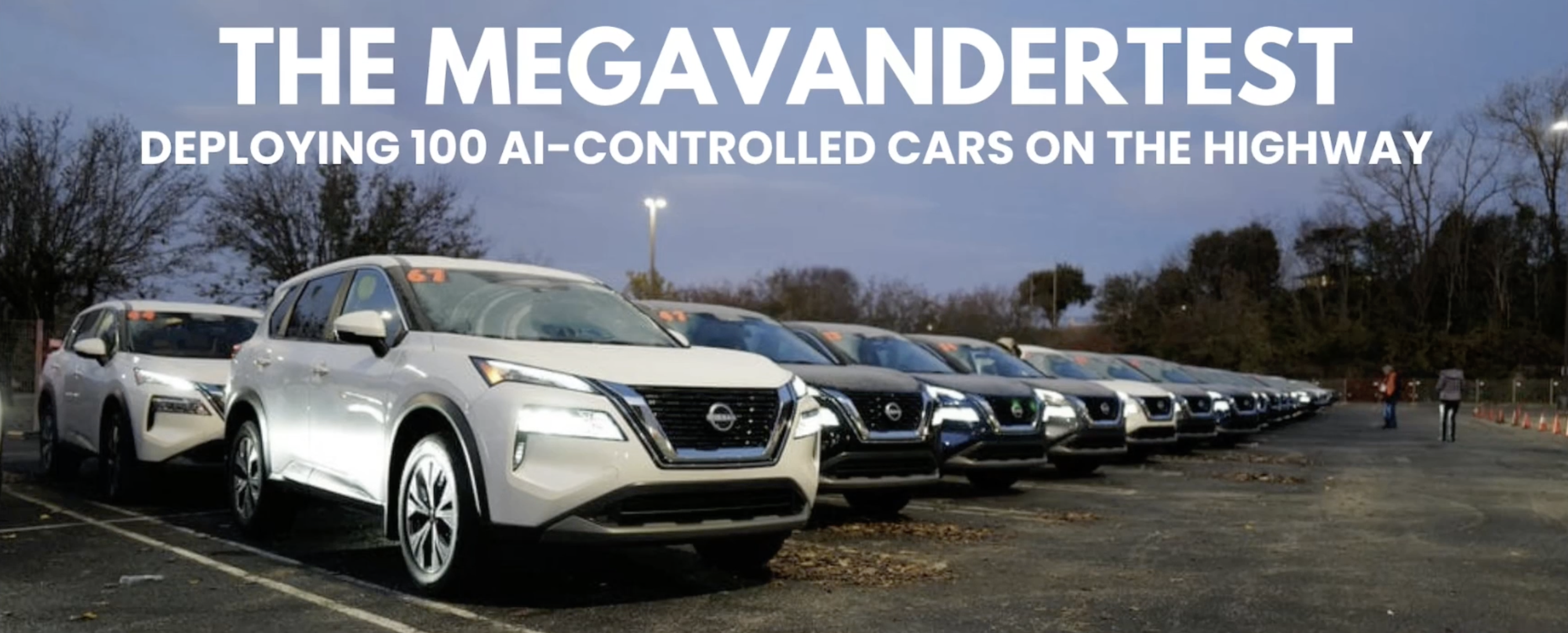
The experiment placed 100 RL-controlled cars into real rush-hour traffic on a highway. The vehicles, acting as a small fraction of all drivers, still managed to significantly reduce stop-and-go waves. The results showed that even a modest number of smart AVs can smooth traffic for everyone—demonstrating a scalable path to less congested roads.
Of course, moving from simulation to the physical world brings challenges. The researchers had to ensure the controllers worked reliably with imperfect sensor data and unpredictable human behavior. Their paper details how they bridged that gap, validating the RL policies on actual highways.
What This Means for Drivers and the Environment
The findings have practical implications. By damping the amplitude of stop-and-go waves, the RL-controlled cars reduced fuel consumption for all vehicles in the traffic stream—not just the AVs themselves. This could lower transportation costs for commuters and decrease carbon emissions from idling and accelerating. Moreover, smoother traffic reduces accident risk, making roads safer.
Looking Ahead: Scaling Up for Every Road
This 100-vehicle test proves that reinforcement learning can be effectively deployed on a large scale. Future steps include testing in more complex driving scenarios—like merging lanes, intersections, and adverse weather—and integrating with vehicle-to-everything (V2X) communication. As more AVs hit the road, the potential for RL to transform traffic flow grows, promising a future where your daily commute is less about frustration and more about efficiency.
"A small proportion of well-controlled autonomous vehicles is enough to significantly improve traffic flow and fuel efficiency for all drivers." – Research team
In sum, the marriage of reinforcement learning and autonomous driving offers a proven, scalable strategy to combat traffic congestion, one phantom jam at a time.